
Looking for ways to build habits that stick without burning you out? Research shows that perseverance builds gradually, and absolute consistency isn't required to succeed. In this article, we'll explore the precise scientific data and offer you a practical method for integrating sustainable routines into your daily life, no matter how busy your schedule is.
Key takeaways:
- It takes an average of 66 days for a new habit to become automated, depending on the individual.
- A single slip-up doesn't derail long-term routine formation.
- Success hinges on personalized reminders and clear organization of your actions.
The Scientific Truth: How Long Does It Really Take?
Many believe a new habit forms in three weeks, but the reality is more nuanced and requires more patience. A study conducted at UCL demonstrated that a new habit takes an average of 66 days to become automatic, with a range of 18 to 254 days depending on the person and the habit.
Understanding Natural Variability
The required duration is not fixed and depends on numerous individual factors.
- Time to Automation: It varies considerably from person to person, ranging from two months to nearly eight months depending on the complexity of the task.
- Persistence Required: Research indicates that consistency over time matters far more than perfection day after day.
What Doesn't Break the Chain
It's reassuring to know that habit formation is a resilient process. A specific study confirmed that missing a single day does not undo the progress already made, even if the routine is interrupted.
Long-term consistency is more important than immediate perfection.
Your Typical Day: Where Does the Routine Break?
You start the day with the intention of drinking water, but you forget until lunchtime. Fatigue at the office often causes you to skip your stretching break, leaving you hunched over the screen by the end of the day. In the evening, bedtime slips away without you noticing. These breakdowns aren't due to a lack of willpower, but rather the absence of external structures that keep your attention focused.
The Invisible Triggers of Drift
Your day often resembles a series of decisions made without scrutiny, where attention shifts toward immediate urgency. Even the simplest habits, like hydrating or stretching your back, require constant vigilance that the brain refuses to grant once the main activity has begun.
- Forgotten Hydration: The glass of water remains on the desk while you concentrate on your tasks.
- Physical Fatigue: Stretching movements are replaced by long periods of immobility at your workstation.
- Sustained Posture: Remaining seated or standing in front of a screen creates early muscle tension.
- Delayed Bedtime: Rest time is pushed back by notifications or unfinished projects.
To rebuild your balance, you must first identify the moments when your initial intention collapses.
The 3 Pillars for a Sustainable Habit
For an action to transition from willpower to automaticity, it must meet three structural conditions: a clear cue, effortless execution, and immediate validation.
Anchor the Habit to an Existing Action
Pair your new routine with a habit you already practice. For example, drink a glass of water right after finishing your morning coffee. Anchoring this in a known sequence helps your brain anticipate the moment to act.
Simplify the Action to the Maximum
Prepare your outfit the night before or place the book on your nightstand to reduce friction. The effort required is often the enemy of getting started, so remove physical obstacles from the outset.
Celebrate Immediately After the Action
A small mental or physical reward validates the behavior and reinforces the pleasure circuit. Know that this validation step solidifies the motivation to repeat, far more than distant moral pressure. To delve deeper into concentration techniques and interruption management, discover the Pomodoro method for managing your time.
If you're looking for a concrete example to get started without feeling overwhelmed, the Pushmi app allows you to create these personalized reminder sequences in just a few seconds.
Use Smart Reminders to Anchor the Habit
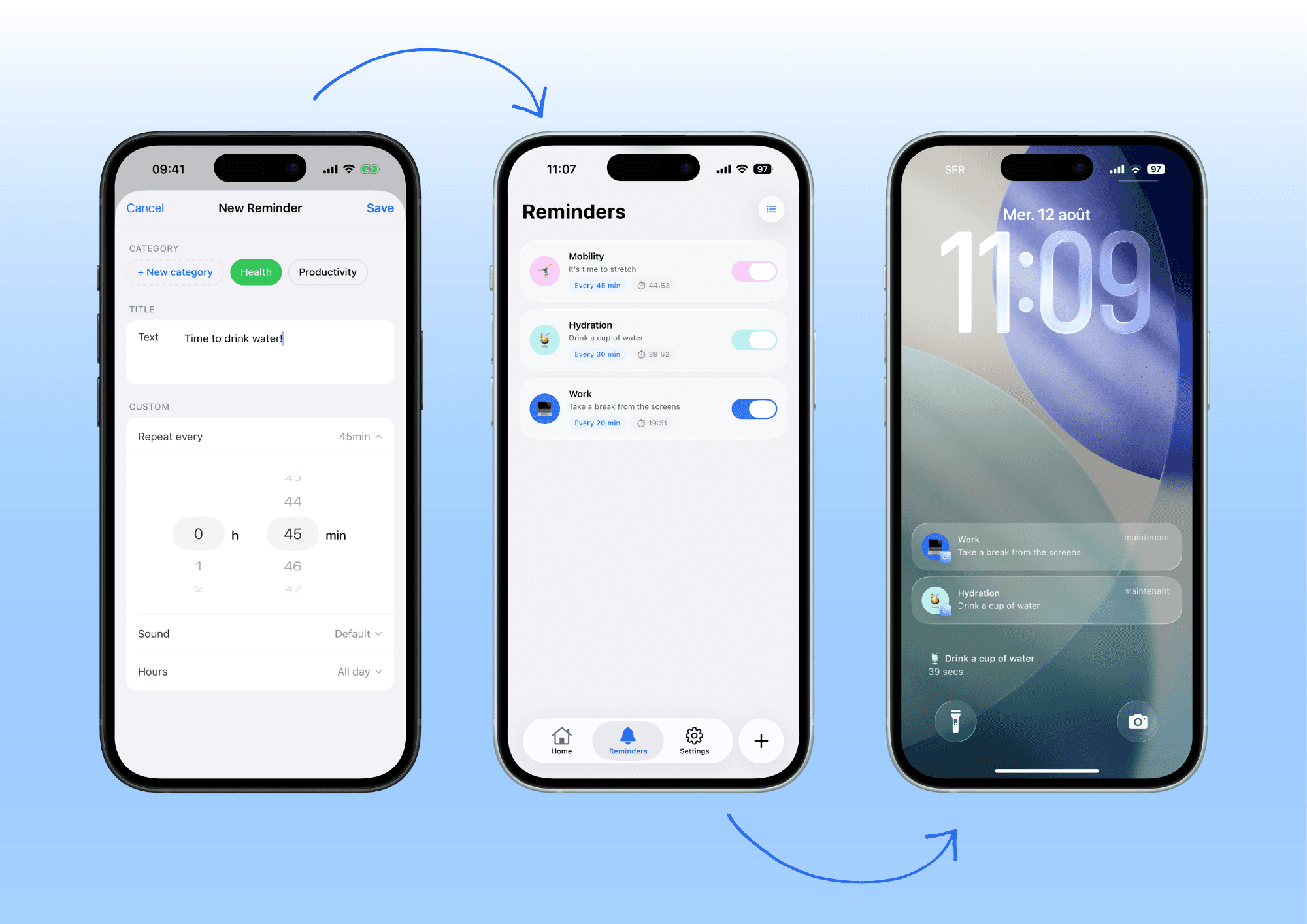
Your routine often breaks down because generic notifications get lost in the noise of your day. Set up recurring notifications with context-specific custom messages so the signal is clear and relevant the moment you wake up.
Tailor the Signal to the Moment
Specific Messages: Replace vague reminders with precise instructions like "Take two sips of water" or "Take three deep breaths" to anchor the immediate action.
Distinct Categories: Create groups to separate your health, work, or mental well-being. This prevents your brain from mixing up priorities midday.
Unique Sounds and Visuals: Pair a unique sound and emoji with each category. This multisensory distinction helps your brain instantly identify what type of attention is required without needing to read the text.
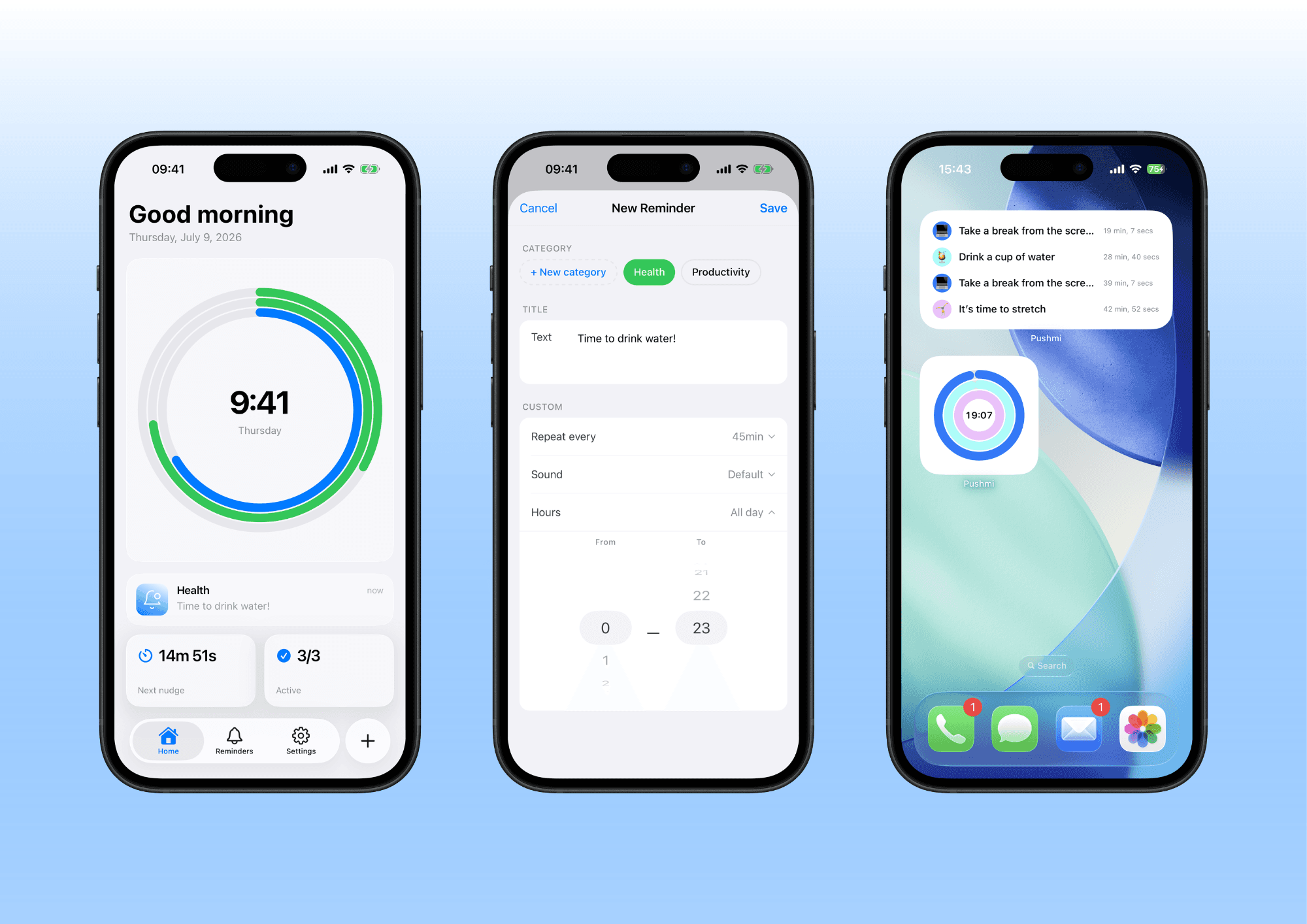
Visualize Your Dynamics in Real Time
To stay motivated, you need to see the gap between your intention and your reality. Add widgets to your home screen to visualize your progress in real time without having to open the app.
Adjust the Pace as Needed
Automation doesn't always follow a rigid straight line. If you feel the habit starting to crumble, adjust the intervals dynamically. Temporarily increase the frequency of reminders to restart the automation process before settling back into a slower pace.
Manage Relapses and Tough Days
Don't blame yourself for a slip-up: a single interruption doesn't undermine the entire process. Research shows that missing a day doesn't stop the habit from forming, meaning you can restart without guilt.
The Science of Immediate Rebound
A study by Lally et al. (UCL 2009) indicates that missing one day doesn't predict whether the habit will eventually become automatic. If you miss a meditation session or a hydration break, the mental chain remains intact as long as you don't spiral into discouragement.
Analyze the Context Briefly evaluate why the habit didn't happen. Were you too tired, stressed, or in a disrupted environment? Understanding this external cause allows you to adjust your approach for the next attempt.
Restart the Very Next Day The goal is to maintain long-term consistency, not perfection. Simply resume the action the following day, perhaps tweaking the timing or duration slightly if the initial rhythm didn't match your current capacity.
Tailor the Method to Your Work Environment
To ensure your new routine survives the office distractions, customize your alerts based on your living space. Organize your reminders by theme to avoid cognitive overload and maintain an effortless overview.
Posture and Hydration
For posture: install visual or sound reminders to correct your sitting position. Place a widget on your home screen to view your back posture in real time, which encourages you to straighten up automatically.
For hydration: create a drinking routine every 45 minutes with notifications.
For reminders: group your alerts by theme (Health, Work, Well-being) so you aren't overwhelmed. Use distinct sounds and emojis to differentiate each category at a glance.
Focus and Organization
For focus: use scheduled breaks to prevent mental fatigue. These regular interruptions allow your brain to recover and maintain a high level of attention. To delve deeper into focus techniques and interruption management, explore our guide for boosting concentration at work.
For professional context: adapt your reminders to your peak hours of the day. You can create specific categories for breaks or important tasks to structure your workday.
The Bottom Line
Remember, consistency beats duration: a habit strengthens without the need for excessive perfectionism. Pushmi helps you automate this daily repetition with precise, personalized reminders, never making you feel guilty if you miss a day.
Frequently Asked Questions
How Long Does It Typically Take to Form a New Habit?
According to UCL research, it takes an average of 66 days for a new habit to become automatic, although this timeline varies considerably from person to person. The study shows that the period can range from 18 to 254 days, depending on the complexity of the behavior and the individual's personality. So, don't get discouraged if the first week doesn't yield immediate results.
Why Do My Healthy Habits Fall Apart After Just One Week?
Building a habit is a neurological process that requires time for the brain to automate the sequence of actions. A common myth about 21 days underestimates biological reality, as most people need several weeks to stabilize their routine. If you give up too soon, you're simply interrupting the process of acquiring the new neural pathway.
Is it necessary to do visualization exercises to build a habit?
Visualization can be helpful for motivation, but it doesn't guarantee habit formation without actual physical repetition. What works concretely is consistently performing the action until it becomes automatic in your daily routine. Scientific data indicates that the frequency and regularity of the gesture are far more decisive than imagination.
What if I forget to do my habit for a whole day?
Don't worry: a single missed day doesn't undo all the progress you've made so far. Research from UCL shows that one day of break doesn't stop habit formation. Just resume the next day, and you'll be back on track without the guilt.
Are phone reminders truly enough to change behavior?
Reminders are an excellent starting point for building a routine, but they don't replace the need to make the action enjoyable or easy. For change to be lasting, the habit must be integrated into your physical environment and personal values, going beyond a simple notification. Use reminders as an initial trigger, but then focus on building a solid ritual.