
If you want to know how to stay focused at work, you need strategies that counteract the natural tendency to switch screens every 47 seconds. This guide walks you through proven techniques to rebuild your concentration and maintain it throughout your day.
Key takeaways:
- Short breaks help reset your brain after distractions.
- The Pomodoro method structures your work time effectively.
- Creating specific conditions supports deep work sessions.
- A simple reminder system helps you return to tasks quickly.
Why Focus Fades: The Science of Attention at Work
You might feel distracted by choice, but the data shows your attention is being stolen by interruptions faster than you realize. Research indicates that people now stay on one screen for 47 seconds on average before switching. source: Gloria Mark, UC Irvine
This rapid switching comes with a heavy cost. After an interruption, people took 23 minutes and 15 seconds on average to get back to the task. source: Gloria Mark, UC Irvine
The Real Culprits
Constant checking of emails or messages is the primary driver of lost focus in modern offices. Beyond digital noise, fatigue and dehydration are major contributors to the inability to sustain attention over a long day.
Practical Ways to Reset
You can fight these natural tendencies by intentionally pausing your work. Taking short breaks is proven to raise energy and reduce mental fatigue, allowing you to return to your screen with a clearer mind.
To support your physical state, consider exploring simple movement breaks to shake off stiffness. You should also review fixing bad posture to ensure your body isn't fighting you.
For a broader look at maintaining a healthy routine, including hydration, you may find value in reading about building healthy habits at work desk.
By understanding that recovery takes nearly half an hour, you can stop trying to force focus and instead design your schedule to protect it.
Technique 1: Using Short Breaks to Reset Your Brain
Walking 5 minutes every 30 minutes of sitting reduced fatigue and improved mood compared with sitting all day. [source: Columbia University, 2023]
Step 1: Step Away Completely
Instead of picking up your phone to scroll, step away from your screen entirely. Digital scrolling drains your attention even more than sitting still, so give your eyes and mind a true rest.
Step 2: Keep It Physical
Make sure your break involves movement like walking or stretching rather than another digital task. This shifts your focus from the desk to your body, which helps reset your nervous system naturally.
Step 3: Use a Timer
Set a timer for 10-minute intervals to prevent burnout during long tasks. You don't need to guess when you're tired; a consistent rhythm keeps your energy steady throughout the day.
Step 4: Stick to the Schedule
These breaks work best when they happen consistently, not just when you feel exhausted. Building this routine now prevents the mental crash that often hits mid-afternoon.
Helpful Resources
For specific examples of physical breaks suitable for remote workers, check our guide on simple movement breaks. If you want to connect these strategies with ergonomic adjustments for a holistic approach, see fixing bad posture. To learn more about building broader routines for posture and hydration, you can check our different articles.
Technique 2: Applying the Pomodoro Method
This structured approach lets you work in focused 25-minute intervals followed by short 5-minute breaks, training your brain to handle tasks in sustainable chunks. By breaking the day into these manageable pieces, you prevent the mental fatigue that often leads to procrastination.
How to Set It Up
- Time Your Sessions: Use a physical timer or a dedicated app to mark exactly 25 minutes of uninterrupted work.
- Eliminate Interruptions: Silence all phone notifications during the work interval to stop the cycle of getting distracted and trying to recover.
- Take a Real Break: Step away from your screen for a full 5 minutes. This rest is crucial for maintaining the quality of your next work session.
Research highlights how quickly attention can drift; people stay on one screen for 47 seconds on average before switching, which makes long, unbroken work periods exhausting. Gloria Mark, UC Irvine
Adjusting for Your Rhythm
While the standard cycle is a great start, feel free to adjust the times to suit your attention span. Some people find success with longer intervals, while others need shorter bursts to stay sharp.
If you are working from home, try pairing these timed sessions with simple movement breaks to keep your energy up.
When Focus Fails
If you find you cannot complete even a single 25-minute block, your environment or health might be the issue. Consider checking your ergonomic setup to see if fixing bad posture could be helping your concentration.
Pushmi helps you stick to this method by sending recurring reminders to start a new session or take a break, ensuring you don't skip the rest periods even when you are busy. Silence all notifications and use a visual timer to enforce the 25-minute rule without digital distraction.
Technique 3: Creating Deep Work Conditions
Deep work is a state of uninterrupted, high-quality concentration on a cognitively demanding task. It requires eliminating distractions like email, Slack, and background noise to let your brain engage fully.
Schedule During Peak Energy
Scheduling these sessions during your peak energy times, often in the morning, ensures your brain is fresh and ready for heavy lifting. Many people find that attempting deep work in the afternoon leads to mental fatigue before it even starts.
Prepare Your Environment
Before the session starts, prepare your environment by putting your phone away and closing the door. A cluttered desk or an open door can silently invite interruptions before you even begin your task.
Protect Your Time
Remember that building this habit takes time and consistent practice to become automatic. You cannot rush deep work; it requires a dedicated commitment to silence and stillness.
Use Movement Breaks
Since you cannot stay focused forever, pair your deep work sessions with short movement breaks. Simple movement breaks provides specific examples of physical breaks suitable for remote workers to reset your focus.
Connect with Ergonomics
A focused mind works best when the body is supported. Fixing bad posture connects focus strategies with ergonomic adjustments for a holistic approach to your day.
Technique 4: Building a Habit Loop with Reminders
Relying on your own willpower to stay focused is often unreliable, especially when fatigue sets in or distractions arise. External cues are significantly more effective at triggering the desired behavior at the exact moment you need it.
Why External Cues Work Better
Your brain responds more strongly to a sudden sound or a visual alert than to an internal thought you might forget. When you set a recurring notification, you create a reliable signal that interrupts your drift and pulls your attention back to the task.
How to Set Up Your Reminder
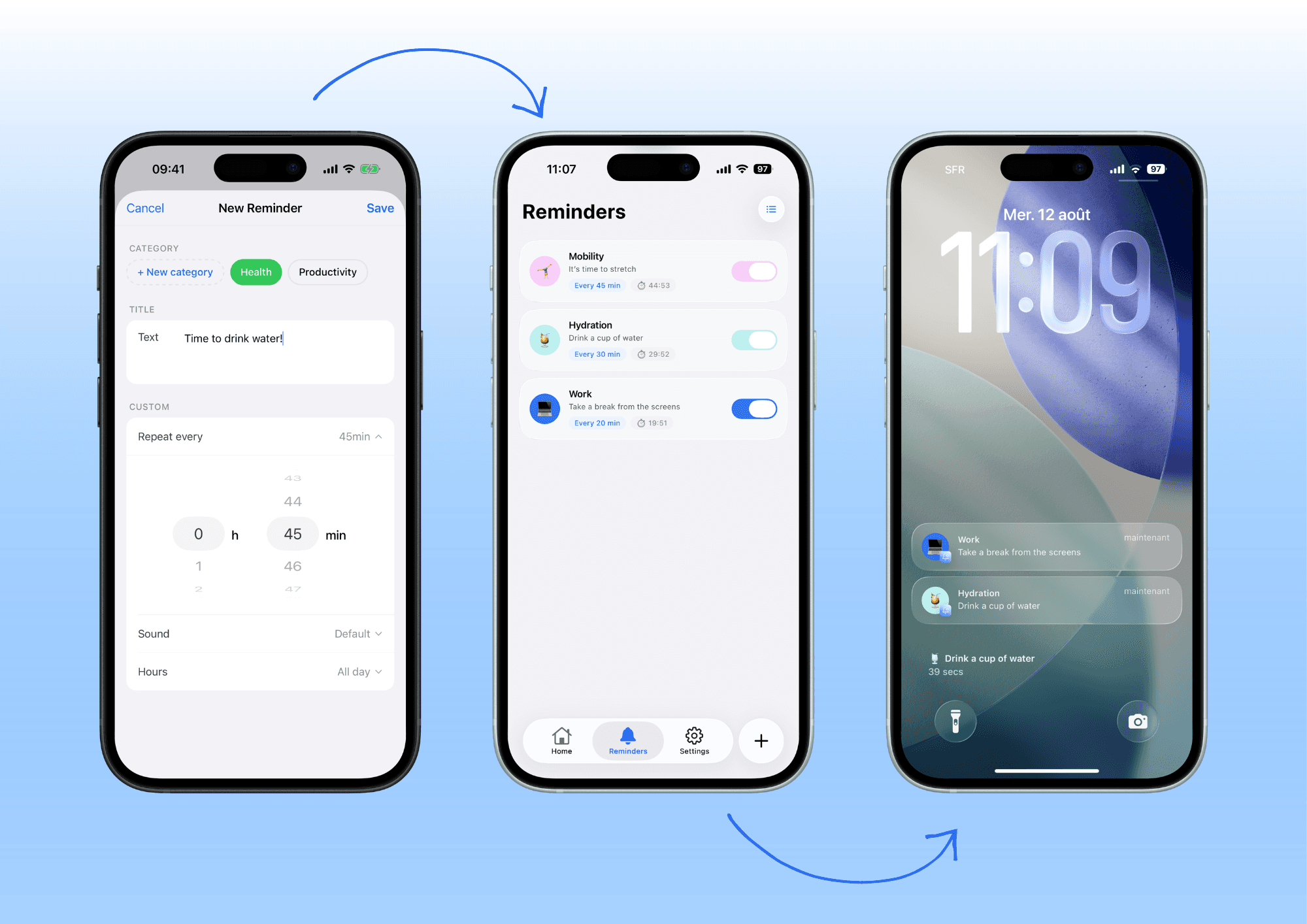
You can build this loop in four simple steps:
- Choose the trigger: Select a recurring interval, such as every 25 minutes, to match your work cycle.
- Write a specific command: Instead of a generic note, customize the message to be action-oriented, like "Take a walk" or "Check your main email."
- Pick a distinct sound: Use a custom sound that stands out against office noise or background chatter so you actually notice it.
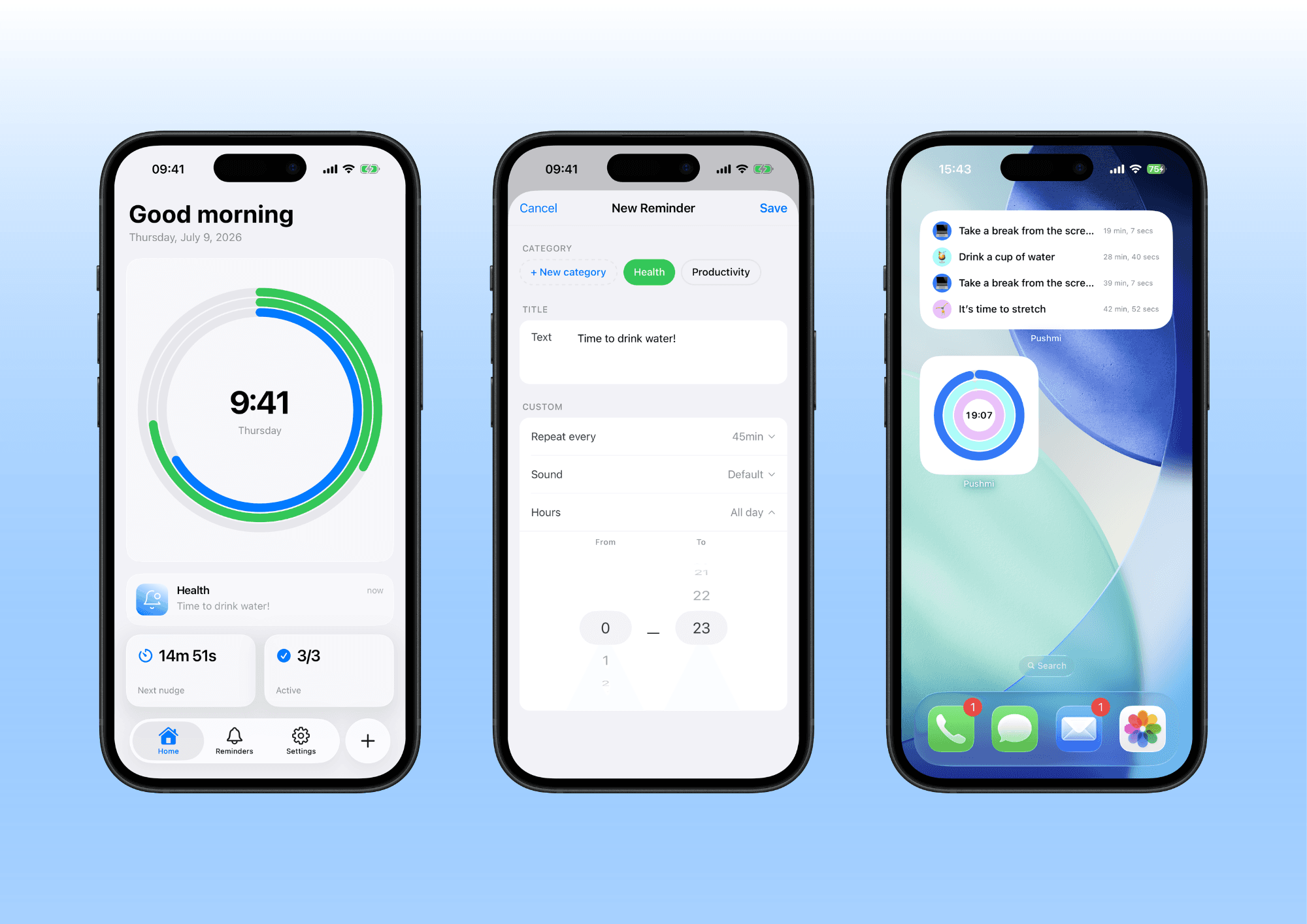
- Add a visual widget: Place a reminder widget on your screen for a quick visual overview of your active tasks.
Turning It Into a Habit
Consistency is the key factor here. Every time the notification appears and you follow the instruction, you reinforce the neural pathway until the action becomes automatic.
Write specific, imperative messages like "Take a walk" to bypass decision fatigue and trigger immediate action. Pushmi helps you manage these recurring reminders effortlessly, allowing you to maintain the rhythm of your day without manual intervention.
When to See a Professional
You might wonder when these focus strategies are enough. If you try these techniques and still struggle, it is wise to seek help from a healthcare provider. This article offers general strategies, not medical diagnoses or treatments.
Know When to Seek Help
Use a professional evaluation for symptoms that significantly impact your daily functioning. A doctor can rule out physical causes like sleep apnea or thyroid issues.
Seek help from a healthcare provider if focus issues are accompanied by pain, dizziness, or severe mood changes. Persistent inability to focus despite trying these techniques could indicate an underlying condition.
Practical Steps While You Wait
While you arrange an appointment, support your focus with simple routines.
- Prioritize Sleep: Aim for consistent rest to reduce brain fog.
- Move Regularly: Take short walks or stretch to refresh your mind.
- Check Your Setup: Ensure your workspace supports comfort and clarity.
Your next step
Protect your attention by treating focus as a habit you keep, not a talent you have. Pushmi helps you maintain that focus by sending gentle, recurring reminders that guide you back to your task without demanding your full energy.
Frequently asked questions
How long does it take to see results from focus techniques?
Most techniques like short breaks or the Pomodoro method can help you regain focus within a single work session. Building a consistent habit that reduces interruptions, such as using recurring reminders, usually takes a few weeks of daily practice to become automatic. Be patient with yourself as your brain learns to resist the urge to switch tasks frequently.
Does listening to music help me stay focused at work?
Listening to music can help some people, but it often becomes a distraction if the lyrics are engaging or the rhythm is too complex. For tasks requiring deep concentration, silence or instrumental soundscapes are generally more effective at maintaining your attention span. If you choose to listen, try low-volume ambient noise to avoid the interruption of needing to process the melody.
What is the difference between the Pomodoro technique and deep work?
The Pomodoro technique uses a timer to break work into short intervals separated by brief breaks to reset your attention. Deep work involves creating a specific environment free from all distractions to engage in a single, cognitively demanding task for an extended period. While Pomodoro manages time through repetition, deep work prioritizes the quality of focus by eliminating external interruptions entirely.
Can I combine multiple focus techniques at once?
Yes, you can combine techniques, but start with one, like short breaks, before adding a second method to avoid overwhelming your brain. A good strategy is to use a timer for your work intervals and then set a recurring reminder to help you transition smoothly into the next session. This layered approach helps you manage the 47 seconds it typically takes for your attention to drift before you switch screens.
Why do I feel tired even after sleeping enough?
Feeling tired despite getting enough sleep is often caused by the cumulative stress of frequent interruptions that prevent your brain from fully resting during downtime. Constantly switching between tasks keeps your brain in a high-alert state, which can drain your energy reserves even when you have closed your eyes. If this fatigue persists and affects your daily life, consider speaking with a healthcare professional to rule out other causes.