
Staying active in winter working from home becomes challenging when short days and cold weather combine to drain your energy before lunch. You can prevent this slump by mixing proven micro-movements into your schedule instead of forcing a full workout. This guide offers a simple, seasonal routine to keep you moving during winter workdays, specifically for remote professionals struggling with low light and fatigue.
Key takeaways:
- Brief walks every thirty minutes significantly lower blood sugar spikes and improve mood.
- Targeted desk stretches relieve common winter neck pain caused by hunching over screens.
- Consistent timing matters more than intensity when daylight is scarce.
- How to use recurring reminders to automate these healthy breaks without extra effort.
Why Winter Makes Staying Active at Your Desk Harder
Cold weather and short daylight hours naturally lower your body temperature and reduce energy levels, making it easier to stay sedentary. The lack of natural light disrupts your circadian rhythm, leading to lower motivation and higher fatigue later in the day.
The Hidden Physical Toll
Office workers report neck pain more than other occupations: between 17.7% and 63% of them in a given year, depending on the study source: Jun et al., Int Arch Occup Environ Health 2017 — [doi.org/10.1007/s00420-017-1205-3]. When you work from home in winter, you often hunch over your laptop to conserve heat or glare, which tightens the muscles in your upper back and neck.
The Mental Slump
Without bright sunlight, your brain struggles to wake up in the morning and stay alert during the afternoon slump. This seasonal dip makes it incredibly difficult to commit to movement when you are already feeling sluggish.
Practical Adjustments for Winter Days
Since a full workout feels impossible when you are exhausted, focus on small adjustments to your current setup.
- Adjust Your Lighting: Move your desk near a window to catch any available sun, or use a bright light therapy lamp to trick your brain into thinking it is daytime.
- Fix Your Posture: Ensure your screen is at eye level and your feet are flat on the floor to relieve neck strain.
- Read More: building healthy habits at your desk to learn how setting up routines for posture, hydration, and movement can help you maintain energy levels.
If you struggle to sit correctly for long hours, check out fixing common posture mistakes at your desk for specific fixes.
The Science of Micro-Movements: Why 5 Minutes Helps
You do not need a full workout to feel the benefits of movement; frequent, short bursts of activity are often more effective for metabolic health than one long session. Research shows that taking just five minutes of walking every thirty minutes can significantly improve your physical state compared to sitting all day.
Cut the Afternoon Slump
Research from Columbia University in 2023 found that walking five minutes every 30 minutes of sitting cut blood sugar spikes after meals by 58% and lowered blood pressure by 4-5 points, compared with sitting all day (Columbia University, 2023). This means a brief pause can reset your energy levels naturally.
Reset Your Mood
In the same study, every walking schedule except 1 minute per hour reduced fatigue and improved mood (Columbia University, 2023). Since winter days are shorter and the cold air can make you feel sluggish, these short breaks help counteract the energy crash.
Simple Ways to Move
- Set a Timer: Use a phone app or computer clock to alert you every half hour.
- Walk in Place: If stepping outside feels too cold, march on the spot for two minutes.
- Stretch While Seated: Reach for your toes or roll your shoulders to wake up stiff muscles.
building healthy habits at your desk offers more ideas for setting up routines for posture, hydration, and movement, while fixing common posture mistakes at your desk provides specific fixes for bad posture.
Step 1: Set Up a Sunlight and Light Reminder
Winter days are short, making it hard to get enough natural light to regulate your sleep and energy. You can fix this by placing your chair near a window or using a full-spectrum light box to mimic daylight during your work hours.
Where to Position Yourself
- Window Placement: Move your desk closer to a sunny spot so you get direct exposure when you start your day.
- Light Box Alternative: If you work in a dark room, use a full-spectrum light box for 10–20 minutes each morning.
Set a Recurring Reminder
- Timing: Schedule a notification for every 90 minutes of work to remind you to look at natural light or step outside for 2–3 minutes.
- Duration: Keep the exposure brief but consistent to reset your internal clock and combat winter lethargy.
Why This Works
This simple exposure helps reset your circadian rhythm, which is often thrown off by the lack of sunlight in colder months. It combats the lethargy of short winter days without requiring a full gym session or leaving your office.
For more on building healthy habits at your desk, check out our guide on building healthy habits at your desk. If you struggle with posture while trying to stay active, read our tips on fixing common posture mistakes at the desk.
How to Automate It
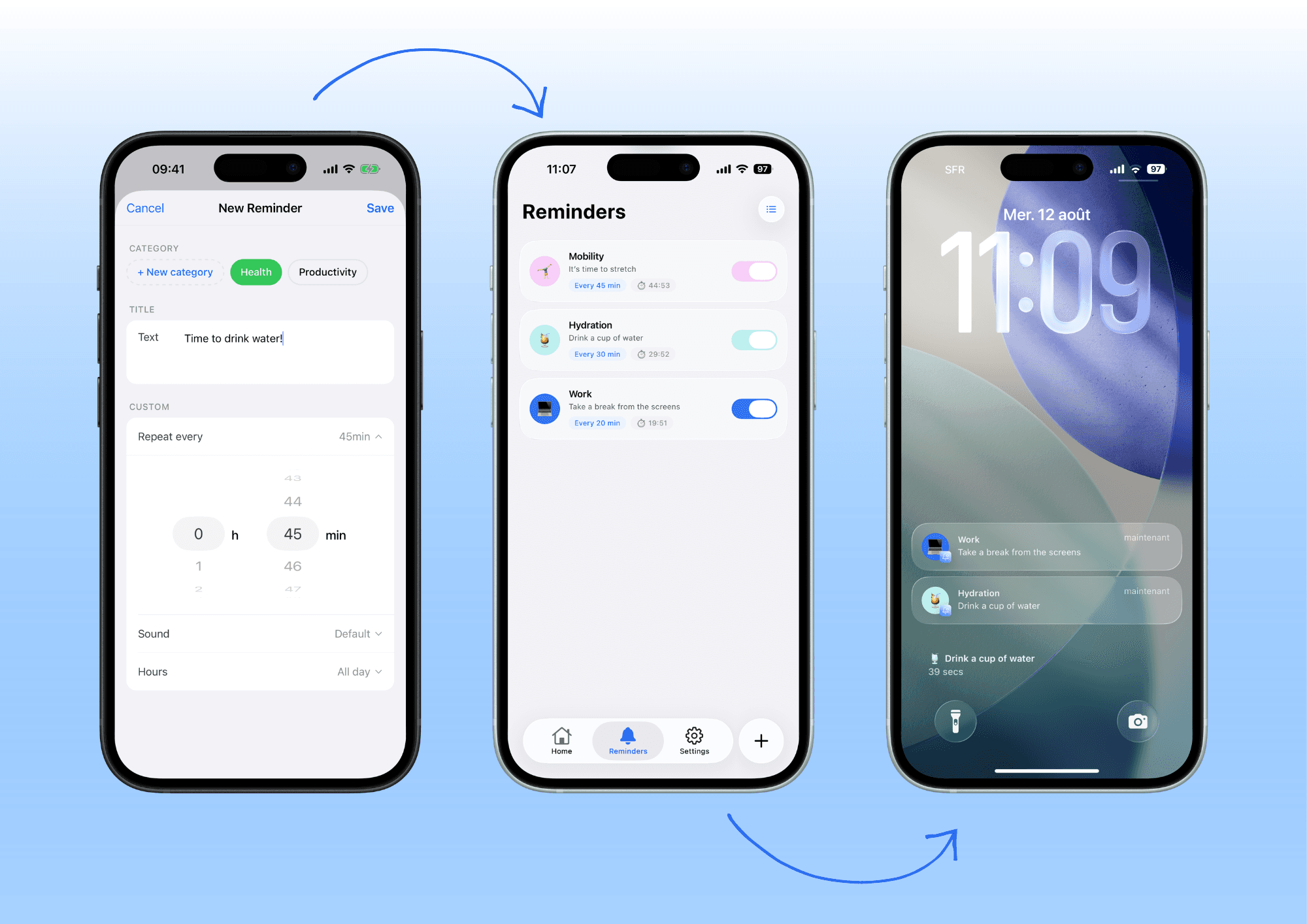
To make this routine stick, set up a recurring reminder in Pushmi. Create a custom notification that repeats every hour and a half, reminding you to take a light break. You can group these reminders under a "Wellness" category and choose a calming emoji to reduce stress. Use a recurring notification to remind yourself to seek natural light every 90 minutes, resetting your internal clock and boosting energy levels throughout the day.
Step 2: Implement the 5-Minute Micro-Walk Routine
Set a timer or alarm to walk around your home or apartment for 5 minutes every 30 minutes of sitting. If you cannot leave your house, simply march in place or do gentle stretches to keep your heart rate up.
Your Personal Movement Schedule
Winter days make it easy to stay seated, but your body needs frequent breaks to stay healthy. Research from Columbia University shows that walking for just five minutes every half hour cuts blood sugar spikes by 58% and lowers blood pressure by 4 to 5 points, compared with sitting all day.
Here is a simple way to build this into your workday:
- Set a recurring alarm: Use a tool that notifies you exactly when to move so you don't forget.
- Choose a safe path: Walk around your apartment, clear your cluttered desk, or step outside if the weather permits.
- March in place: If you are stuck indoors, marching vigorously for five minutes keeps your heart rate up and reduces fatigue.
Why the 30-Minute Interval Matters
You might think a long walk at the end of the day is enough, but the timing is critical. A study found that every walking schedule except one minute per hour reduced fatigue and improved mood. The 30-minute window ensures your blood flow stays active, preventing that heavy, sluggish feeling common in winter.
If you already have a routine for hydration or posture, this movement break fits easily alongside those habits. For more details on maintaining good posture while you work, check out fixing common posture mistakes at your desk. Set an alarm for every 30 minutes to ensure you get the specific 5-minute boost that lowers blood pressure and prevents winter fatigue.
Step 3: Use a Desk Stretch Routine for Neck and Shoulders
Office workers report neck pain more than other occupations: between 17.7% and 63% of them in a given year, depending on the study source: Jun et al., Int Arch Occup Environ Health 2017 — [doi.org/10.1007/s00420-017-1205-3]. Since cold weather and low light tighten your muscles, you need a specific stretch routine to counteract the hunch you develop at your desk.
The Two-Minute Fix
Chin Tuck Sit up straight and gently pull your head back until the back of your neck feels a slight stretch. Hold for five seconds, then release. Repeat this three times to align your spine with your ears.
Shoulder Roll Roll your shoulders up toward your ears, hold briefly, and roll them back and down. Do this five times to release tension accumulated from typing or holding a phone.
Prevent the Strain
Avoid looking down at your phone or laptop for long periods to prevent strain. If you must check messages, raise the device to eye level or use speakerphone. For your computer, adjust your screen height so you are looking straight ahead rather than down at the keyboard.
For a comprehensive guide on correcting your sitting posture to reduce long-term damage, check out fixing common posture mistakes at your desk. If you need broader strategies for maintaining hydration and movement throughout your workday, you might also find value in building healthy habits at your desk. Keep your monitor at eye level to stop your head from jutting forward and to reduce neck pressure.
How Pushmi Keeps Your Winter Routine Consistent
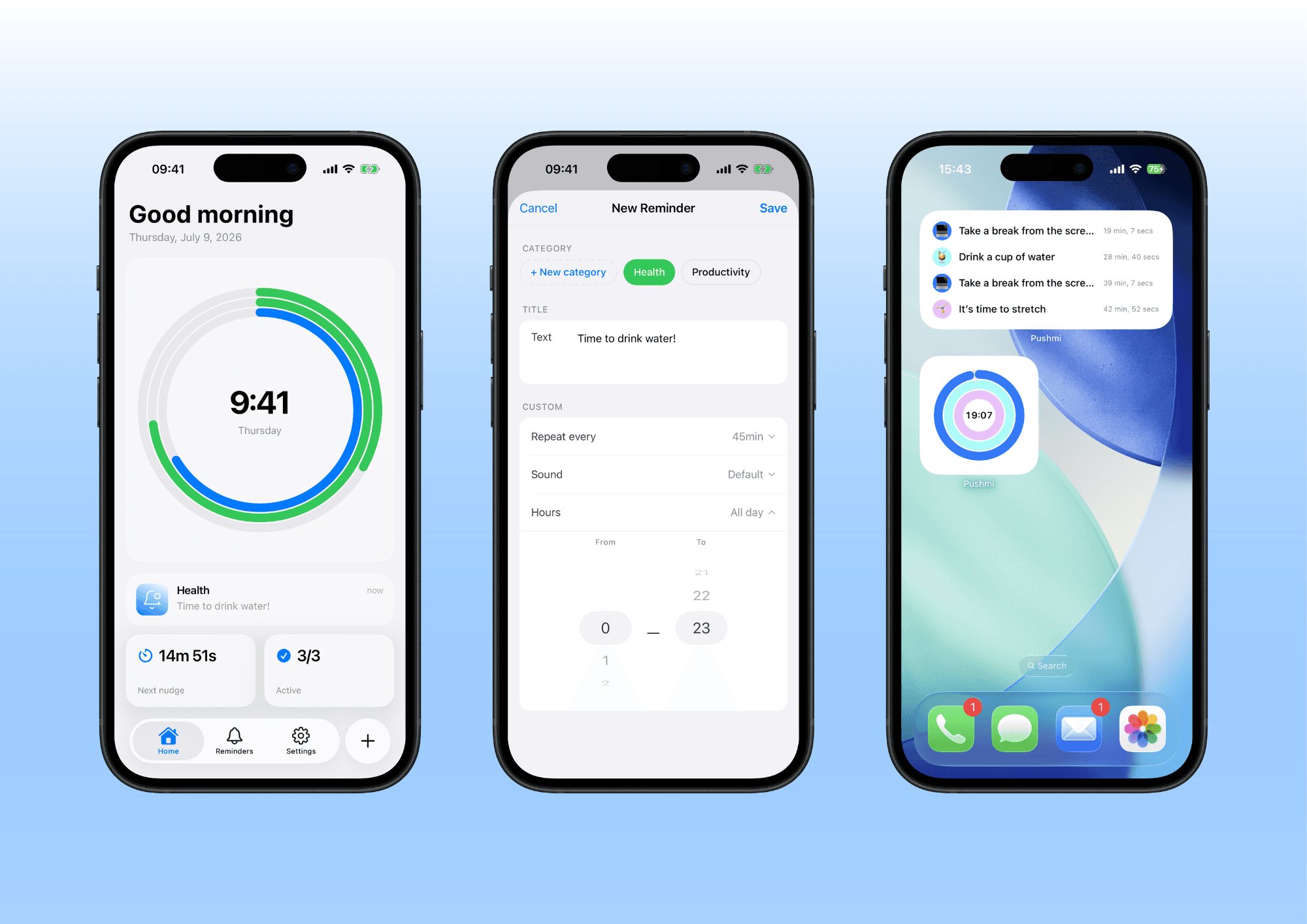
You need a system that survives the holiday slump and the dark winter mornings. Pushmi acts as your personal accountability partner, ensuring you actually remember to move when your body wants to stay still.
Set Up Your Core Habits
Use Pushmi to set recurring reminders with custom messages like "Step outside for fresh air" or "Do your 5-minute walk" to ensure you stick to the schedule. Since winter days are short, you cannot rely on memory alone; the app sends the nudge exactly when you need it most.
Organize for Clarity
Group your reminders by category (e.g., "Movement", "Hydration") and choose custom emojis to make the notifications visually engaging and easier to ignore less often. This visual structure helps your brain recognize the pattern, making the habit feel less like a chore.
See What's Next
Pushmi's locked and unlocked screen widgets give you a quick visual overview of your active reminders, so you never forget your next movement break. You can glance at your phone while working to see if it is time for a stretch or a walk without opening the full app.
Build the Foundation First
Before adding complex timers, check out our guide on building healthy habits at your desk to learn how to structure your day. If you are already experiencing pain, we also recommend reading about fixing common posture mistakes at the desk to address the root cause.
Once your routine is set, download Pushmi for free on the App Store to start building your consistency today. Use custom emojis on your lock screen to make movement breaks feel inviting and noticeable throughout the day.
Your next step
Remember that consistency beats intensity, so automate your movement breaks rather than relying on willpower. Pushmi handles the scheduling and notifications, ensuring you actually walk for five minutes during those long winter hours without needing to think about it.
Frequently asked questions
What is the best way to exercise when working from home in winter?
The most effective approach is to integrate short, frequent movement breaks into your day rather than relying on a single long session. These micro-movements help counteract the energy crash caused by cold weather and a lack of natural light. You can combine brief walks with simple desk stretches to maintain momentum without needing to leave your home.
How often should I move during winter work hours?
Research suggests that walking for just five minutes every thirty minutes of sitting can significantly improve your mood and reduce fatigue. This frequent schedule is more effective than waiting an hour or longer between breaks, especially during the darker winter months. Aim to stand up and move for a few minutes regularly to keep your circulation flowing.
Can short walks replace a full gym workout?
Short walks cannot replace a full gym workout, but they are highly effective at preventing the specific health issues caused by prolonged sitting. For example, walking five minutes every half hour cuts blood sugar spikes after meals by 58% and lowers blood pressure. These micro-movements are ideal for maintaining metabolic health and energy during work hours without requiring a full session.
How do short winter days affect my energy levels?
Short days often lead to lower energy because your body produces less melatonin and serotonin, which can make you feel sluggish and unmotivated. The lack of sunlight disrupts your circadian rhythm, making it harder to stay alert during the workday. Getting natural light exposure and breaking up your sedentary time are key strategies to combat this seasonal drop in vitality.
What are simple desk stretches for neck pain?
Office workers report neck pain more than other occupations, but you can alleviate it with simple stretches like gently tilting your ear toward your shoulder. Keeping your screen at eye level is a simple adjustment that reduces strain on your neck and upper back. If pain persists, consult a healthcare professional for personalized advice.