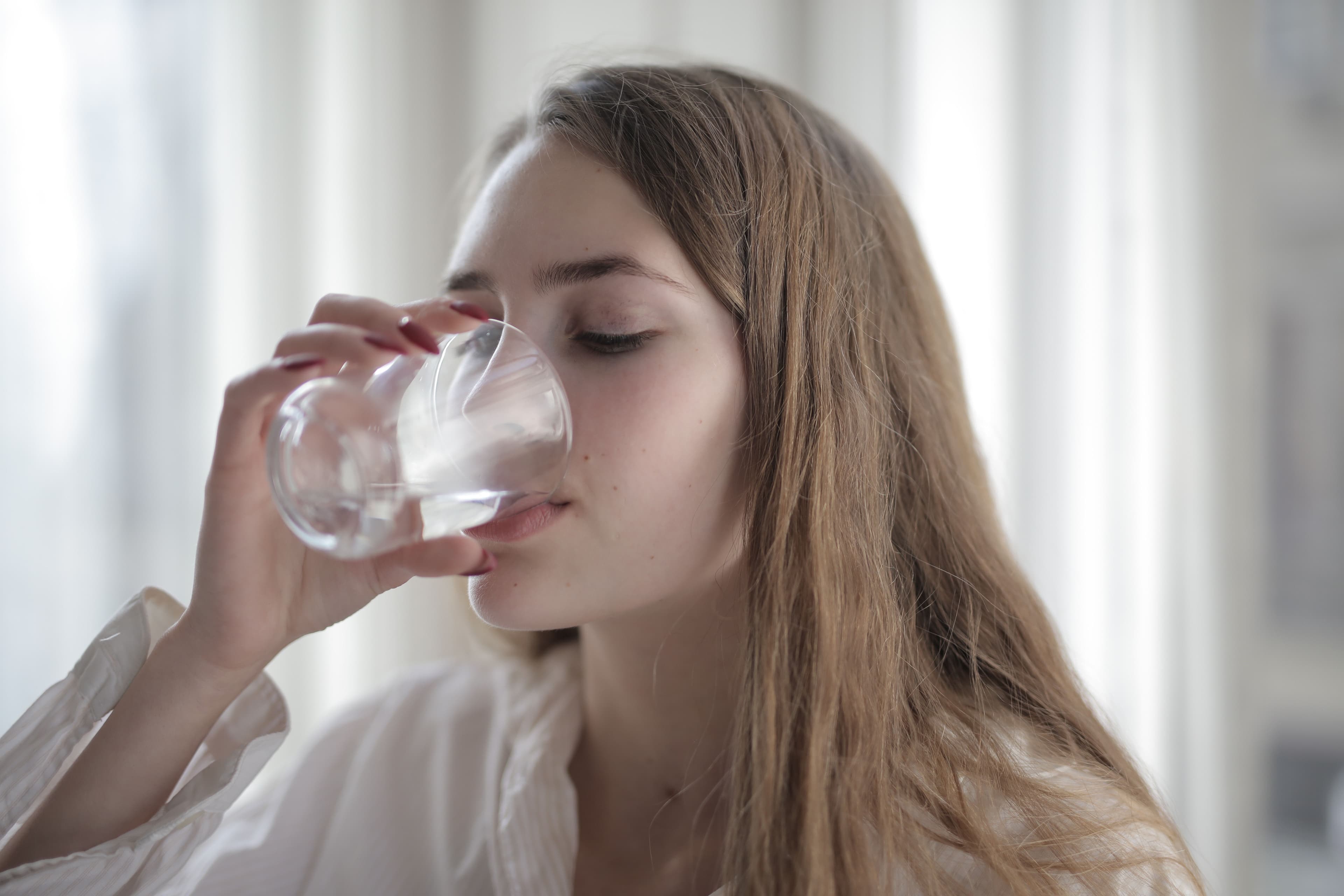
Looking for a way to remember to drink water? This method shows you how to structure your day with simple breaks and use a personalized reminder to stay hydrated automatically. This guide is designed to help you adopt this habit without mental effort or reliance on your memory.
Key Takeaways:
- Identify key moments in your day to drink.
- Place visual cues, like a carafe, where you can see them.
- Use a notification tool to alert you.
- Listen to your body's signals to stay hydrated.
Why Hydration Is Crucial for Your Energy and Focus
Dehydration begins to impact your mood and cognitive abilities as soon as you lose about 1.4% of your body's water. A 2012 study shows that this water loss makes tasks more difficult for healthy women.
The Invisible Effects on Your Day
In daily life, most men and women do not consume enough water compared to European recommendations. You may experience a drop in energy or difficulty focusing, even if you feel physically fine.
- Rapid Mental Fatigue: Your brain needs optimal blood flow to function, which depends on hydration.
- Slowed Reaction Times: A lack of water reduces your alertness, increasing the risk of errors in your work or personal tasks.
- Unstable Mood: Mild dehydration can cause irritability or discouragement without an apparent reason.
To learn more about specific symptoms related to mental and physical fatigue in the workplace, consult signs of dehydration at work.
If you're looking to boost your immediate productivity, hydration and active breaks help with focus, as explained in techniques to stay focused.
The Importance of Adequate Hydration
Health authorities indicate that recommended daily intake varies by sex, but most adults do not meet these needs. That's why a regular hydration routine is often more effective than chugging large amounts of water at once.
To integrate hydration into a comprehensive wellness routine at work, you can discover how to adopt healthy habits at the office.
Assess Your Current Situation and Identify Your Barriers
Note when you feel thirsty, as this sensation often appears after a slight drop in hydration. Pinpoint the times when you forget most frequently, such as during intense work sessions or during lunch breaks. Observe whether your environment, whether at home or in the office, facilitates or hinders access to a water bottle within reach.
Pay Attention to Your Current Sensations and Habits
- Note hunger or fatigue signals: If you feel tired or less focused, it may be a sign that your body is lacking water, even if you don't feel immediate thirst.
- Identify your forgetting periods: Think about your typical day. Often, demanding concentration or routine tasks cause hydration to take a back seat.
- Analyze your access to water: Do you have a bottle within arm's reach on your workspace? If the bottle is hidden or hard to reach, you are inadvertently creating a barrier to hydration.
Improve Your Work Environment
- Place a visible water bottle: Put a filled bottle of water near your keyboard or on your main desk to make it hard to ignore.
If your habit analysis shows that you systematically forget to drink, know that hydration directly supports your concentration and mental energy.
By integrating these observations into your daily routine, you begin to build a solid foundation for adopting healthy habits in the office.
Create Visual and Physical Triggers in Your Day
Your brain responds better to concrete cues than to sheer willpower. To stop forgetting to drink, integrate water directly into your environment and your habitual actions.
Place a Water Bottle in Sight
Position it strategically: Keep a filled bottle on your desk or near your bed. If it's hidden in a cupboard, you'll never see it. Sight alone is often enough to trigger the action without extra effort.
Link Water Intake to an Existing Habit
Mental Cueing: Pair drinking water with a routine that's already solid, such as the end of a call or leaving the meeting room. Every time that action happens, your brain sends the signal: "It's time to drink."
Link water intake to a fixed daily habit to create a natural reflex.
Structure Your Day with Hydration Breaks
Divide your day into 45-to-60-minute segments and pair each block with a glass of water. A smartwatch or paper calendar can serve as reliable triggers to mark these moments without mental effort.
Set Regular Intervals
Establish a fixed cadence, such as a glass every hour or every two hours, to build a habitual rhythm. This consistency helps your brain anticipate the action, reducing reliance on memory.
Aim for a Realistic Goal
European authorities recommend a total intake of approximately 2.5 liters for men and 2.0 liters for women, including water contained in food. source: EFSA, 2010 — [doi.org/10.2903/j.efsa.2010.1459]
Factor in your physical activity or climate to adjust these volumes in real time. One study shows that even a 1.4% loss of body water can impair your mood and ability to perform tasks, even in healthy young adults. source: Armstrong et al., Journal of Nutrition 2012 — [pubmed.ncbi.nlm.nih.gov/22190027/]
Avoid Common Pitfalls That Derail Habits
Don't ignore early warning signs of dehydration, such as mental fatigue, dry mouth, or difficulty concentrating. If you feel less productive, proper hydration can help sustain your focus and reduce feelings of sluggishness.
Integrate this routine into a broader set of healthy habits, such as stepping away from the screen or stretching your body.
How to Use a Reminder Tool to Automate Hydration
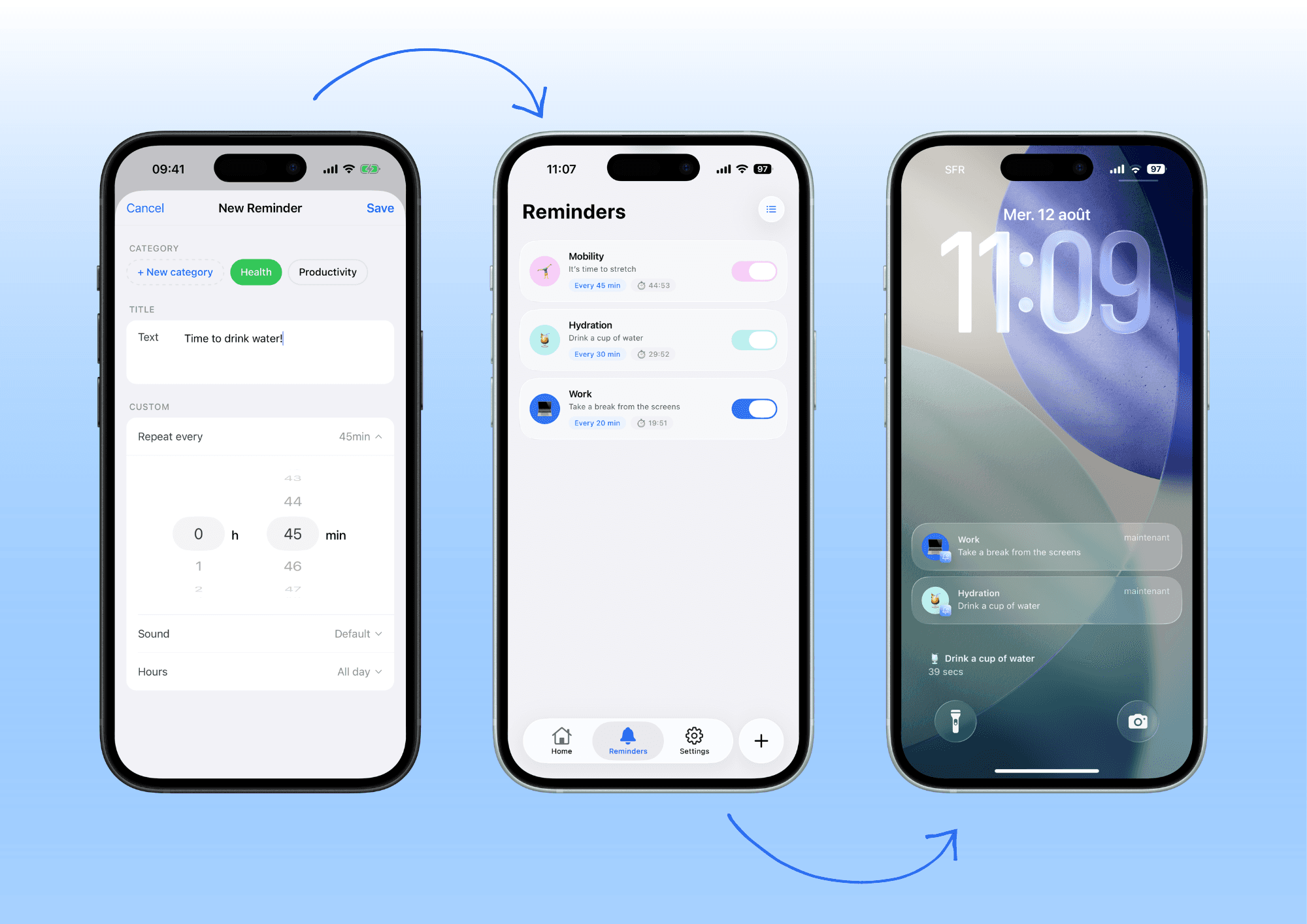
Automation transforms your reliance on memory into a reliable process. Set up recurring notifications that chime at regular intervals, as repetition is the primary lever for anchoring a new habit.
Personalize Your Sound and Message
Select a distinct sound for each category, such as a gentle chime for hydration and a more neutral tone for other tasks. Choose a short, direct message, like "Take a sip of water now," to avoid unnecessary distraction.
Organize Your Reminders by Category
Create groups to sort your notifications. A dedicated category for self-care will help you quickly visualize what's left to do, without confusion with your work alerts.
Visualize Your Routine at a Glance
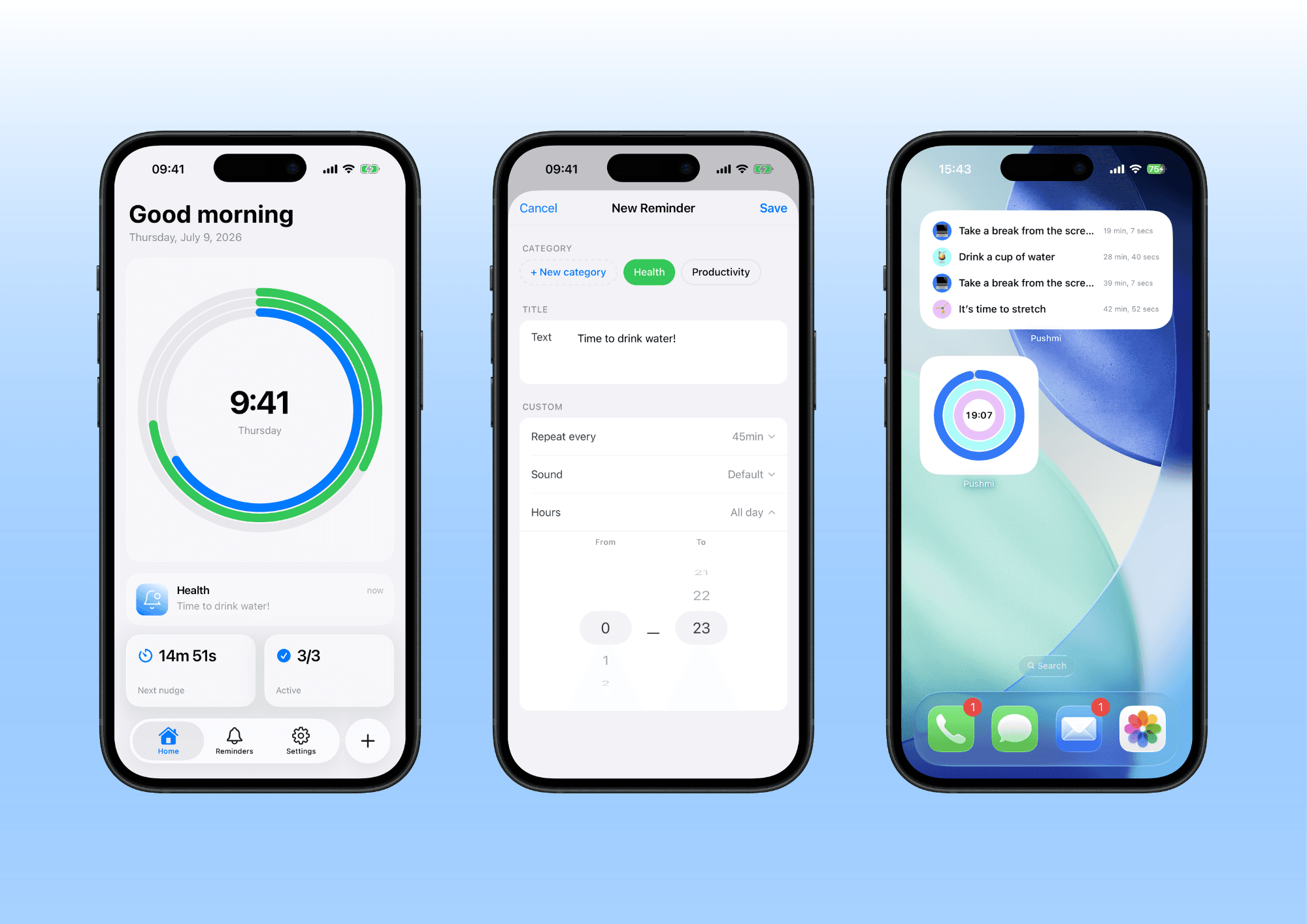
Add a widget to your home screen or lock screen to view your progress without opening the app. This overview encourages you to drink before even checking your phone.
This automation method is the key to moving from intention to consistent action, reducing the need for willpower. Set up notifications that chime at regular intervals so your body remembers to drink without the mental effort.
Avoid Common Pitfalls That Derail Your Habits
Even with the best intentions, certain mental patterns can block your hydration. That's why it's crucial to recognize the traps you might fall into, so you don't slip back into cycles of dehydration.
Don't Rely Solely on Willpower
Fatigue and stress naturally reduce your ability to remember to drink, even if you intend to stay hydrated.
Avoid Drinking Too Quickly
Opt for small, frequent amounts rather than emptying a large container all at once. This allows your body to absorb water effectively and prevents false sensations of thirst.
If You're Experiencing Persistent Symptoms
If you continue to suffer from fatigue or headaches despite regular hydration, consult a healthcare professional. These symptoms may have other causes.
In conclusion
What matters most is turning your intention into a concrete action you'll never miss. Pushmi helps you automate this process with personalized, recurring reminders tailored to your day. This way, you can focus on your work while letting Pushmi take care of you.
Frequently Asked Questions
What is the recommended daily water intake?
The European Food Safety Authority recommends consuming 2.0 litres per day for women and 2.5 litres per day for men, including water from food and beverages combined. It is important to note that these amounts vary depending on the individual and their level of physical activity.
Why do I often forget to drink water?
Your body doesn't signal thirst until you're already slightly dehydrated, making the need for hydration less obvious on a day-to-day basis. Moreover, daily routines can take precedence over hydration, especially when you're focused on other tasks.
Should You Drink Water Before or After Meals?
Drinking water before a meal can help prepare your body for digestion, while drinking after allows the stomach to rebalance. In both cases, water intake is beneficial, but avoid drinking too much right before eating to prevent diluting digestive enzymes.
Do fruit juices count as water?
Fruit juices contain water, but they are often high in sugar and less hydrating than plain water. For optimal hydration, choose still or mineral water over sugary drinks.
How to Tell If You're Dehydrated at Work?
Low energy, reduced concentration, or sudden fatigue can be early signs of dehydration, even if you don't feel thirsty. If you experience these symptoms, try drinking a glass of water and see if your condition improves quickly.