
7 Common Posture Mistakes That Make You Slouch (And How to Fix Them)
Stop slouching by fixing these 7 common mistakes.
If you want to know how to stop slouching at desk, the answer lies in building a reliable reminder system rather than relying on willpower alone. Most of us return to a hunched position because our brains quickly revert to comfortable, long-held patterns. This guide explains the psychological and ergonomic triggers behind bad posture and offers a practical way to maintain an upright position without constant mental effort. Whether you are struggling with a laptop at home or a workstation at the office, these simple steps help you stay straighter.
The Brain's Habit Loop: Why You Slouch Again
Why do you instinctively slump back into your chair within minutes of sitting straight? Your brain naturally prioritizes comfort over precision, causing you to revert to slouching before you even realize it. This is because years of poor sitting habits have created deep muscle memory that overrides any conscious attempt to sit upright.
Prioritize Comfort Over Precision
Your nervous system seeks the path of least resistance. When you first adjust your spine, the muscles feel tight, but soon your body relaxes into a familiar, slouched position. This isn't laziness; it is an automatic physiological response to ease tension.
Overpowered by Muscle Memory
Long-term habits mean your muscles are conditioned to hunch, making it difficult to maintain an upright position. When you consciously pull your shoulders back, the return to slouching happens almost instantly as your muscles dominate the movement.
Distractions Break Your Focus
Every ping from an email or notification pulls your attention away from your body. When your focus shifts to the screen, you unconsciously relax your back support, allowing gravity to pull you forward again.
Understanding these internal triggers is the first step to breaking the cycle. Most people struggle not because they lack knowledge, but because their brain reverts to the old pattern faster than they can correct it. Since relying on willpower alone is often insufficient to fight this instinct, you need a system that keeps you accountable without needing to think about it.
Ergonomic Mistakes That Invite Slouching
Your physical setup often works against your best intentions, creating invisible forces that pull you into a slouched position within minutes of sitting down. Addressing these specific environmental triggers is the first step toward lasting comfort.
Screen Too Low
Look Down Placing your monitor below eye level forces your head to drop forward. This misalignment shifts the weight of your head, causing your upper spine to round and strain your neck muscles. To fix this, raise your screen until the top third aligns with your line of sight, allowing your neck to stay neutral.
Chair Too Soft
Sink Too Deep Excessively soft cushions allow your hips to slide backward into the seat. This movement pulls your pelvis forward into a tilted position, which collapses the natural curve of your lower back. A firmer surface helps maintain proper pelvic alignment, keeping your spine in its natural S-shape.
Feet Not Supported
Slide Down Without a footrest, your feet dangle or rest on the floor unevenly. This lack of stability causes your legs to slide down, forcing your torso to hunch forward to maintain balance. Ensure your feet rest flat on the ground or a stable surface to keep your hips level and your core engaged.
These environmental factors explain why you might feel fine initially but revert to bad posture quickly. Once you adjust your workspace to support a neutral spine, you create a foundation where good posture feels natural rather than forced.
For a simple way to track these adjustments and remember to maintain them throughout the day, consider setting up recurring reminders that prompt you to check your screen height or sit up straight.
Why Reliance on Memory Fails
Most people struggle to maintain good posture not because they lack the knowledge of how to sit correctly, but because their brain reverts to the old slouching pattern faster than they can consciously correct it. Your nervous system constantly seeks the path of least resistance, relaxing into a familiar position the moment you let your guard down. Since relying on willpower alone is often insufficient to fight this instinct, you need a system that keeps you accountable.
Physical Setup Disconnects
Your body's alignment depends on your environment matching your intent. If your workspace fails to support a neutral spine, your muscles must work overtime to compensate, leading to rapid fatigue and a return to the path of least resistance.
The Mental State Collapse
Sustaining an upright position requires active cognitive engagement, which is easily depleted by complex tasks or mental fatigue. As your brain tires, it unconsciously lets go of the effort required to hold posture, defaulting back to the relaxed, slouched position as a form of mental surrender.
Understanding these internal triggers is the first step to breaking the cycle.
How to Build a 'Set-and-Forget' Posture Habit
You can stop relying on your own memory by creating a system that nudges you automatically throughout the day. This approach removes the mental effort required to remember to sit straight, allowing you to focus on your work.
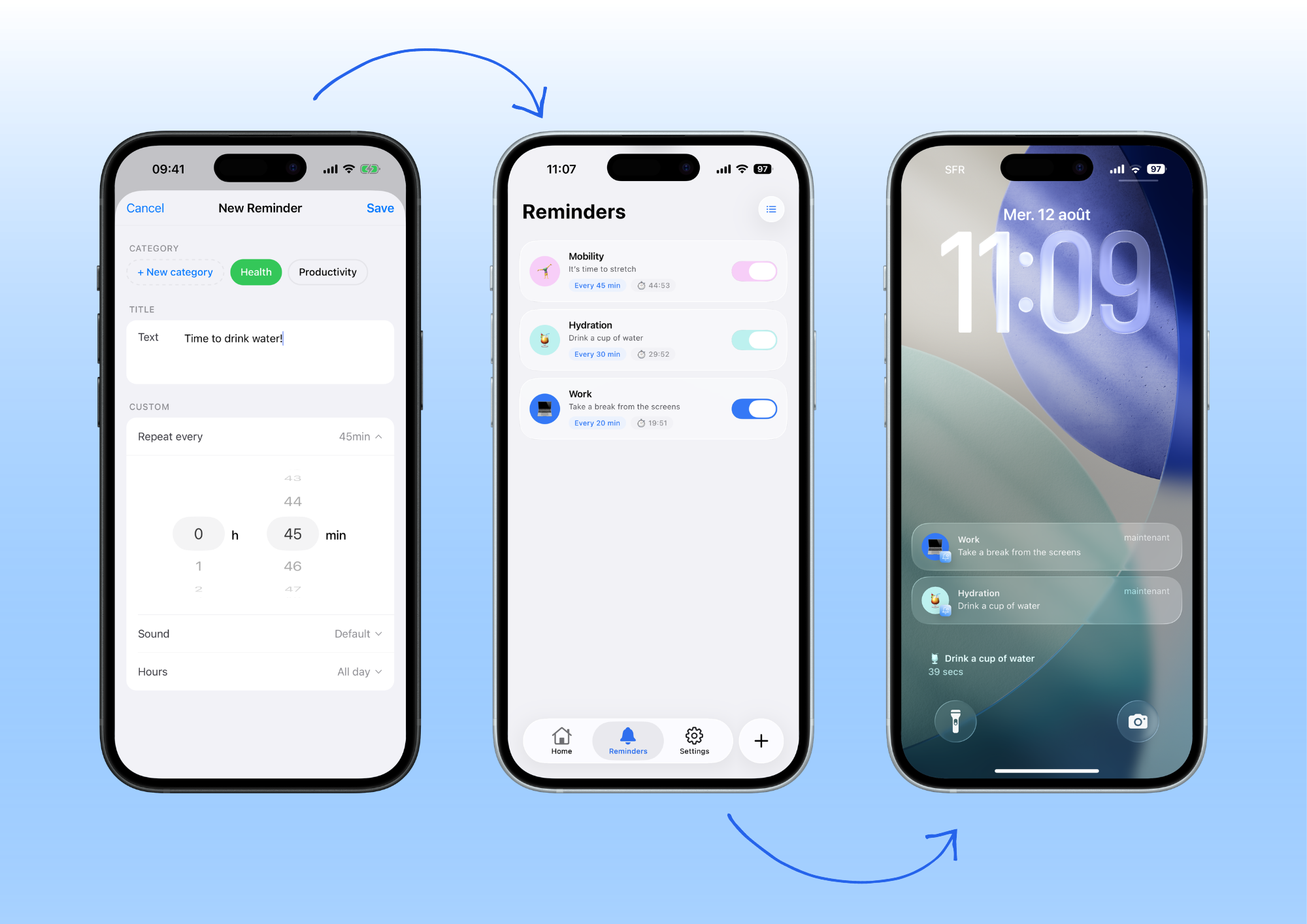
Set Specific, Personalized Triggers
Generic reminders like "Check your posture" often get ignored because they feel vague. Instead, use recurring notifications with custom messages that match your specific pain points. You might set a prompt that says, "Remember to sit tall and breathe," which feels more like a helpful suggestion than a command.
Organize Your Routine Visually
To ensure you stay on track without constant mental checks, group your reminders by category, such as 'Health' or 'Work'. This lets you visualize your routine at a glance, often through a widget on your phone's lock screen. Seeing your entire day's plan in one place helps you mentally prepare for the next healthy habit before you even start working.
Pair Checks with Micro-Actions
One common mistake is trying to "just sit straight" for hours, which leads to burnout. Pair a posture check with a micro-action, like drinking water or standing up for a minute. These small, immediate tasks reset your body and make the correction feel natural and sustainable.
By setting these up in Pushmi, you create a reliable safety net that looks after you even when you are focused on deep work. Download Pushmi to start building your personalized habit loop today.
When to See a Professional
You are not always required to fix posture issues alone, but knowing when to seek help is crucial for your long-term health. This section clarifies when standard home adjustments are no longer enough.
Pain Signals That Need Attention
Listen closely to your body's warning system. If you feel sharp pain, numbness, or tingling in your arms or legs, stop relying on self-correction. These specific symptoms can indicate nerve compression or structural problems that require a medical diagnosis.
When Home Fixes Fail
Sometimes, changing your chair or reminding yourself to sit straight isn't enough. If home remedies and ergonomic changes do not improve your comfort after a few weeks, a professional assessment is necessary. Persistent discomfort suggests the root cause may be deeper than just habit or equipment.
The Right Specialist to Call
Consult a physical therapist or occupational therapist for a personalized assessment. They can identify underlying issues that a simple app reminder cannot address. While tools like Pushmi are excellent for building good habits, they are not substitutes for professional medical advice when pain persists.
A Note on Self-Correction Limits
Remember that general advice, like raising your screen to eye level, is a good first step for everyone. However, if you have been trying these widely accepted tips without relief, waiting longer could worsen the strain. Seeking expert guidance ensures you get a treatment plan tailored to your specific body mechanics.
Frequently asked questions
Why does my posture get worse after I fix it?
Your brain prioritizes comfort over alignment, causing you to return to familiar slouching positions quickly. This happens because long-term habits are deeply ingrained, and without a consistent external cue, your body defaults to the easiest posture.
What is the best way to remind myself to sit straight?
Set recurring reminders that ping you throughout the day to check your alignment, ensuring you stay aware of your position. Use a simple app like Pushmi to create a personalized notification system that fits seamlessly into your routine without feeling intrusive.
Does slouching at a desk cause long-term health issues?
Prolonged slouching can lead to chronic neck and back pain, as well as reduced breathing capacity and circulation. If you are experiencing persistent pain or discomfort, please consult a healthcare professional for proper diagnosis and treatment.
Your Next Step
The most effective way to stop returning to slouching is to shift from relying on willpower to relying on a timely, personalized nudge that interrupts your bad habit loop. Since your brain needs consistent reinforcement to form a new pattern, set up recurring reminders in Pushmi to gently guide your posture whenever you sit down. You can grab the app immediately to start building this protective habit by visiting Pushmi.